
When The Business Changes But The Work Doesn't
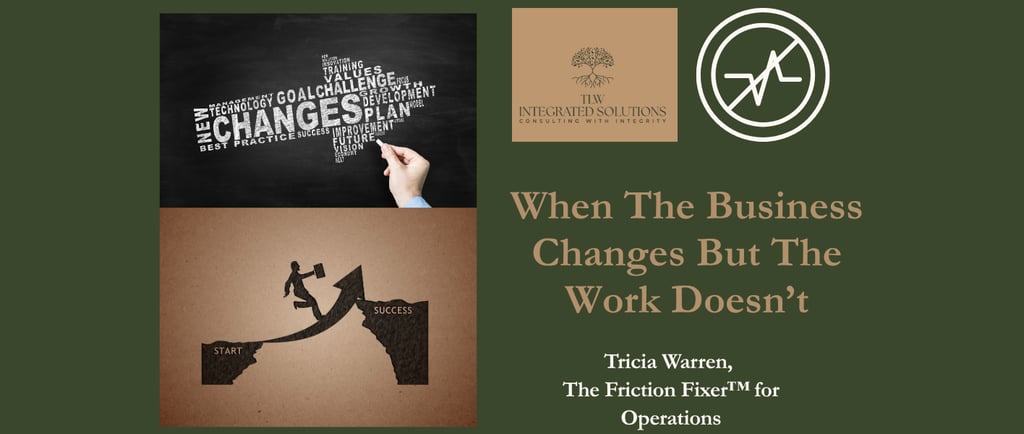
When I look through my Friction Fixer Lens, growth has a funny way of exposing things people were able to work around before.
When a business is smaller, people can cover for a lot. They step in, fill gaps, make judgment calls on the fly, and keep things moving with effort and good instincts. For a while, that works. Then the business grows, expectations rise, new tools get layered in, and the same ways of working that once felt manageable start to feel heavier than they should.
Last month, I wrote about why fixing friction has to come before scaling the tech. This month, I want to go a level deeper into three places that friction tends to show up first: decision flow, workflow handoffs, and execution velocity.
These are the places where businesses often feel the strain most, whether they are in insurance, professional services, or tech products & services. They are also the places where leaders tend to get pulled back into the middle when the business has changed, but the way work gets done has not changed with it.
When Decision Flow Hasn't Caught Up
One of the first signs that a business has outgrown the way it works is that decisions start taking longer than they should.
Sometimes that looks like unnecessary escalation, the same issue circling back because no one is fully clear on who owns the next move, or leaders becoming the default decision makers simply because the system still relies on them to keep momentum going.
This shows up in different ways across industries. In insurance, it might be a flagged issue that still needs several layers of interpretation before anyone acts. In professional services, it can be client work that moves forward only after multiple people weigh in on scope, resourcing, or priority. In tech products & services, it often surfaces when teams gain earlier visibility into delivery risk, but the path from signal to action still feels fuzzy.
Technology can surface information faster. It cannot, by itself, fix decision ownership.
When Workflow Handoffs Still Depend on Workarounds
Another place friction becomes more visible is in the handoff between teams.
This is where businesses often discover that one part of the workflow has become more efficient, but the rest of the process has not been redesigned to move with it. Intake , reporting, and visibility may all improve. But when work crosses functions, it still slows down because too much depends on follow-up, clarification, or people filling in the blanks for one another.
In insurance, that might mean a smoother intake process but delays between underwriting and operations. In professional services, it can look like strong business development on the front end but messy handoffs into delivery. In tech services, it often means tickets, projects, or priorities move quickly into the system, but coordination across teams still depends on informal workarounds.
This is the kind of friction that rarely looks intense from the outside. It just makes work feel harder than it should.

When Execution Velocity Rises But The System Still Drags
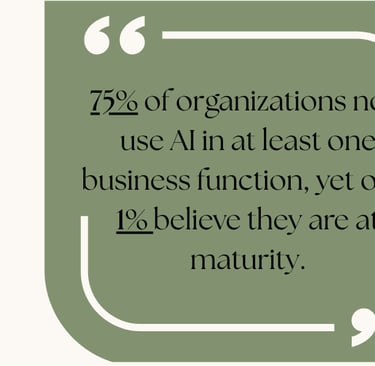
A lot of businesses are trying to move faster right now, and in many ways they need to. Markets are moving quickly, clients expect more, and teams are under pressure to do more with less. AI is also entering the picture, and for some businesses it is helping create more speed, more visibility, and more pressure all at once.
That is where the gap becomes impossible to ignore.
Execution velocity is not just about how quickly work starts. It is about how steadily it moves from one stage to the next without losing momentum, quality, or accountability. Some businesses start to feel drag in this space. Work starts quickly, but it does not always land cleanly. Teams stay busy, but output does not rise at the same rate. Leaders feel like they are still carrying too much of the business in their heads, calendars, and follow-ups.
That is not usually a talent problem. It is often a sign that the business has added speed without strengthening the structure underneath it.

This is why I keep coming back to the same point: fix the friction first, then scale the tech.
Not because technology is the problem, it is not. Not because growing businesses should slow down because they should not. But because when decision flow is fuzzy, when handoffs depend on workarounds, and when execution still relies on too much heroics, more speed only makes those issues louder.
AI does not replace operational maturity. It accelerates whatever is already there. That is why the real question is not just whether the business is ready for more technology. It is whether the way work moves is still serving the business you are running now.